
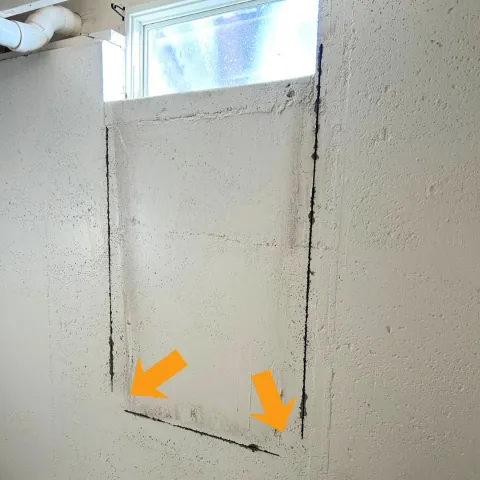
When it comes to installing an egress window, the most critical step is cutting the opening in your basement wall. Get it right, and you've got a watertight window that will last for decades. Get it wrong, and you're dealing with water problems from day one.
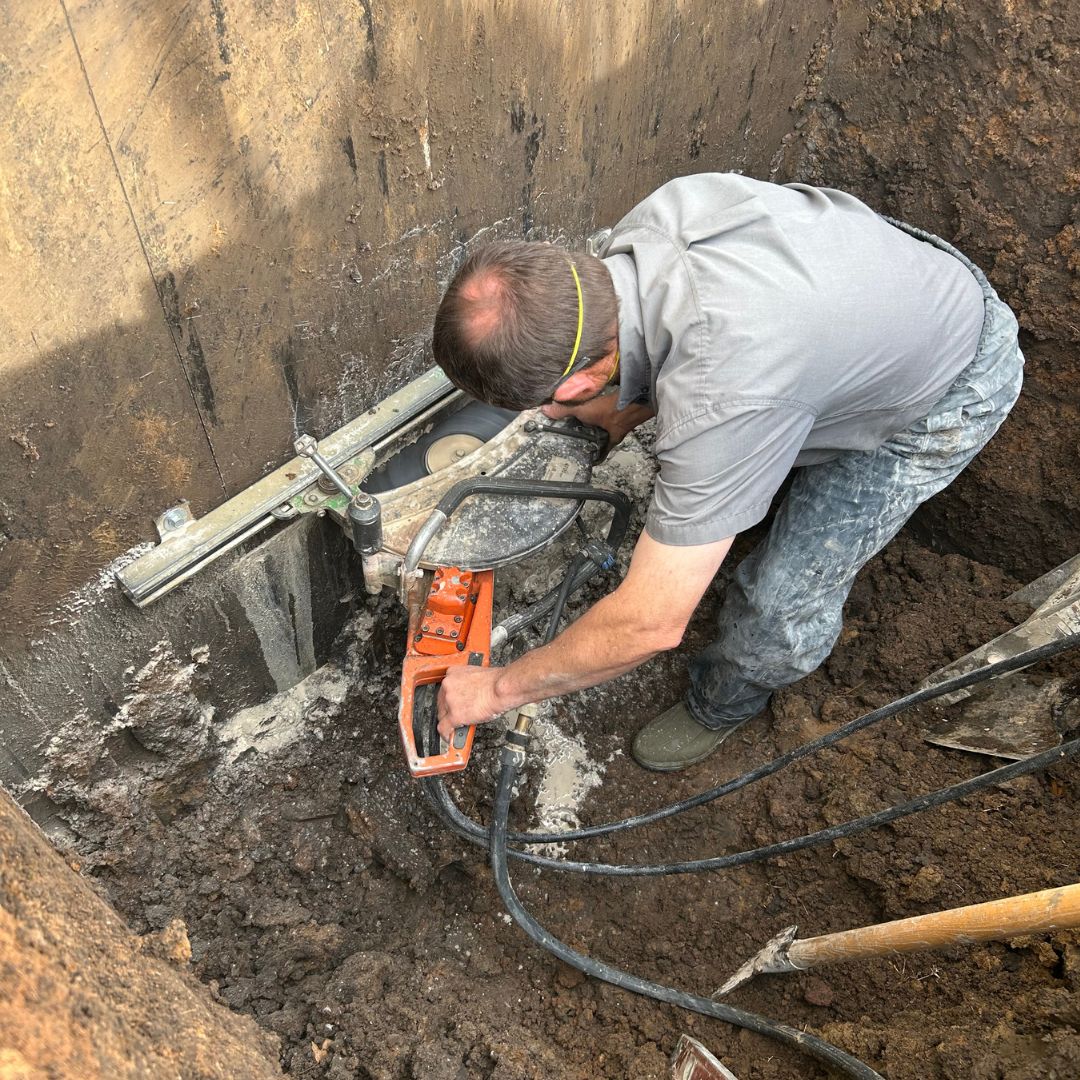
At Illumicast, we use a specialized concrete cutting saw and a technique specifically designed to produce clean, precise openings — without overcuts. If you've never heard of overcuts before, keep reading. Understanding what they are (and why we avoid them) will help you see why our installations stay dry.
What Is an Overcut?
When you cut a rectangular opening in a concrete wall, you have four corners. A circular saw blade doesn't naturally make sharp 90-degree corners — it makes curves. That's just the geometry of a round blade meeting a flat surface.
Many concrete cutters deal with this by running their saw past the corner of the opening. This creates a clean, sharp corner, but it also extends the cut beyond the edge of the window opening. Those extended slits are called overcuts.
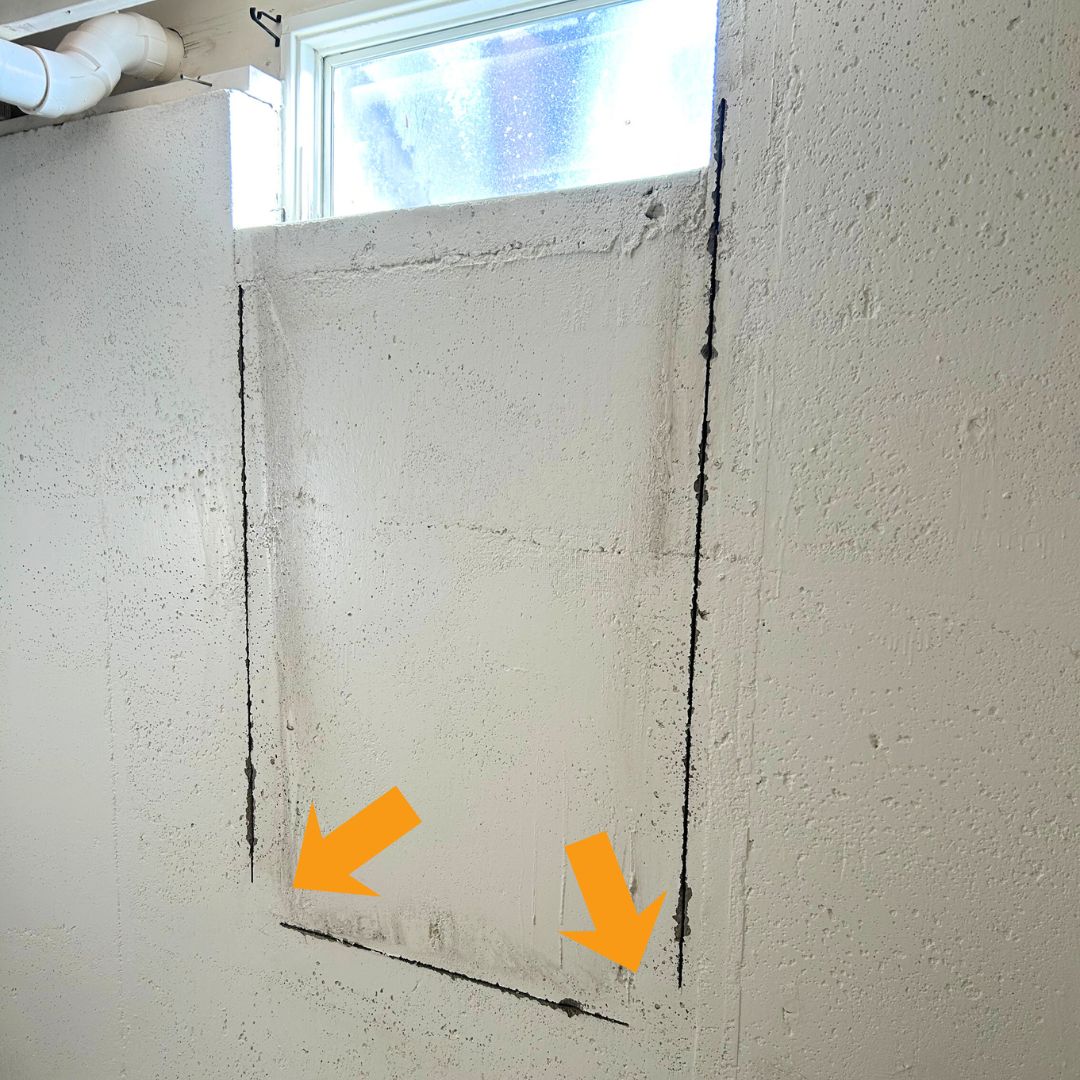
You can think of overcuts like little slices that extend out from each corner of the window opening into the surrounding concrete wall. They're typically a few inches long, and there can be up to eight of them on a single opening — two at each corner, one from each intersecting cut line.
Why Are Overcuts a Problem?
Overcuts create gaps in the concrete wall that extend beyond where the window frame sits. Your egress window and its frame are sized to cover the opening itself, not extra slits that extend beyond the corners. That means those overcuts are essentially small cracks in your foundation wall that sit behind the window frame where you can't easily seal them.
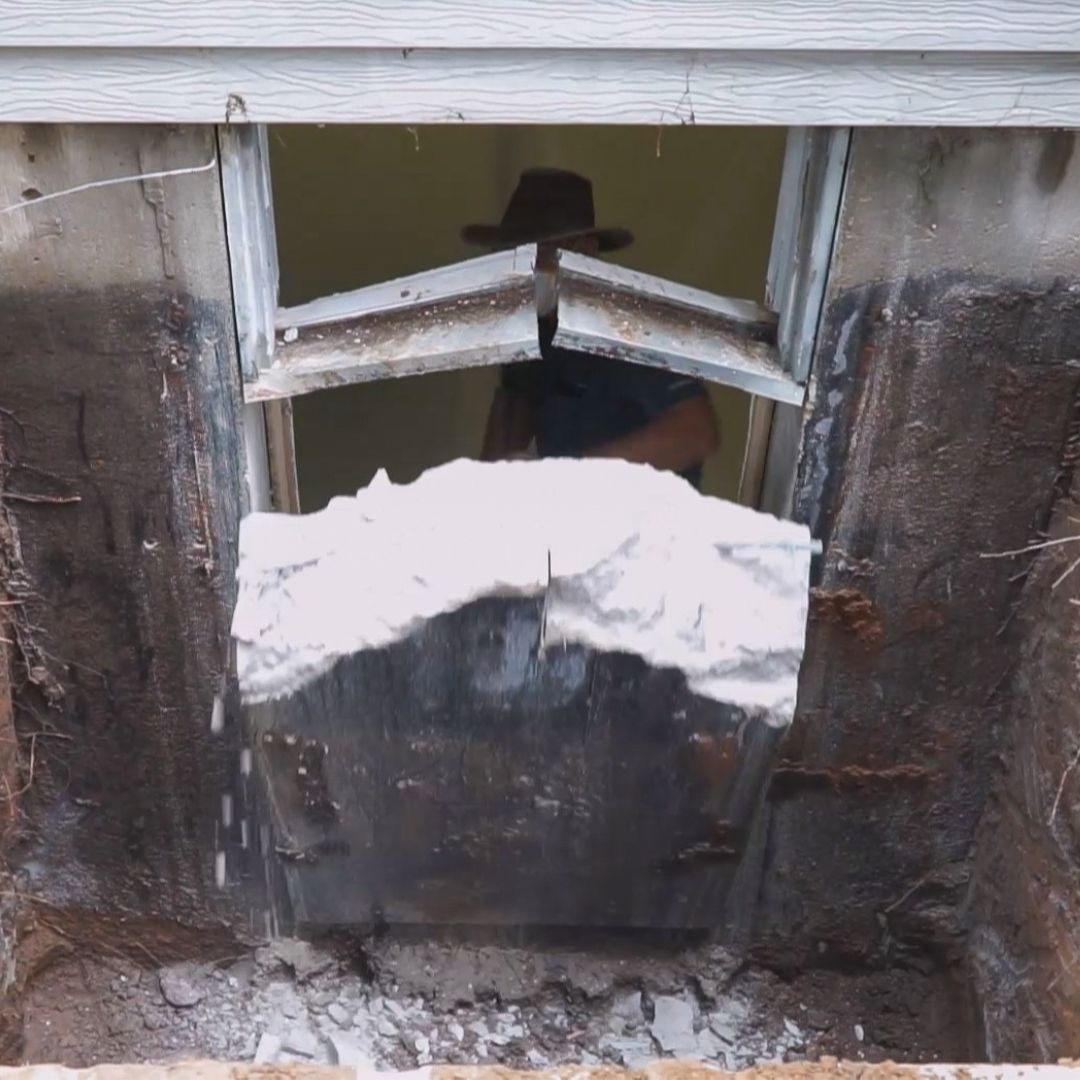
Water is persistent. It will find its way into even the smallest gap, and overcuts give it a direct path. Over time, moisture can work its way through those slits and into your basement. Even if someone tries to fill overcuts with caulk or hydraulic cement after the fact, those repairs can shrink, crack, or fail as your foundation shifts with the seasons.
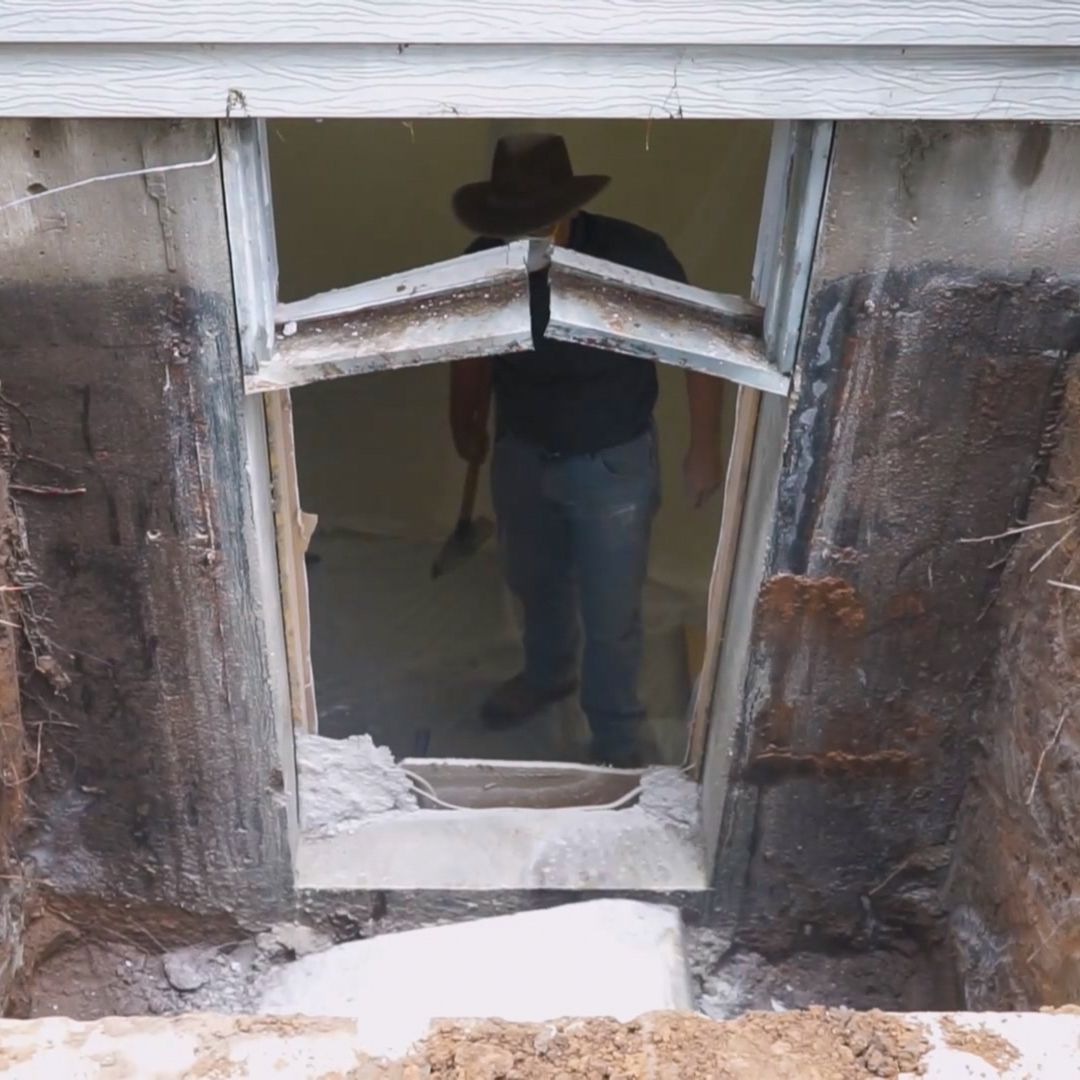
In short, overcuts compromise the watertight integrity of your new egress window installation — and that's the last thing you want after investing in a window well.
Our Specialized Concrete Saw
We don't use just any old concrete saw. Our concrete ring saw is specifically chosen for egress window installations, and our crew has developed a cutting technique over hundreds of installations that allows us to produce precise openings with clean corners.
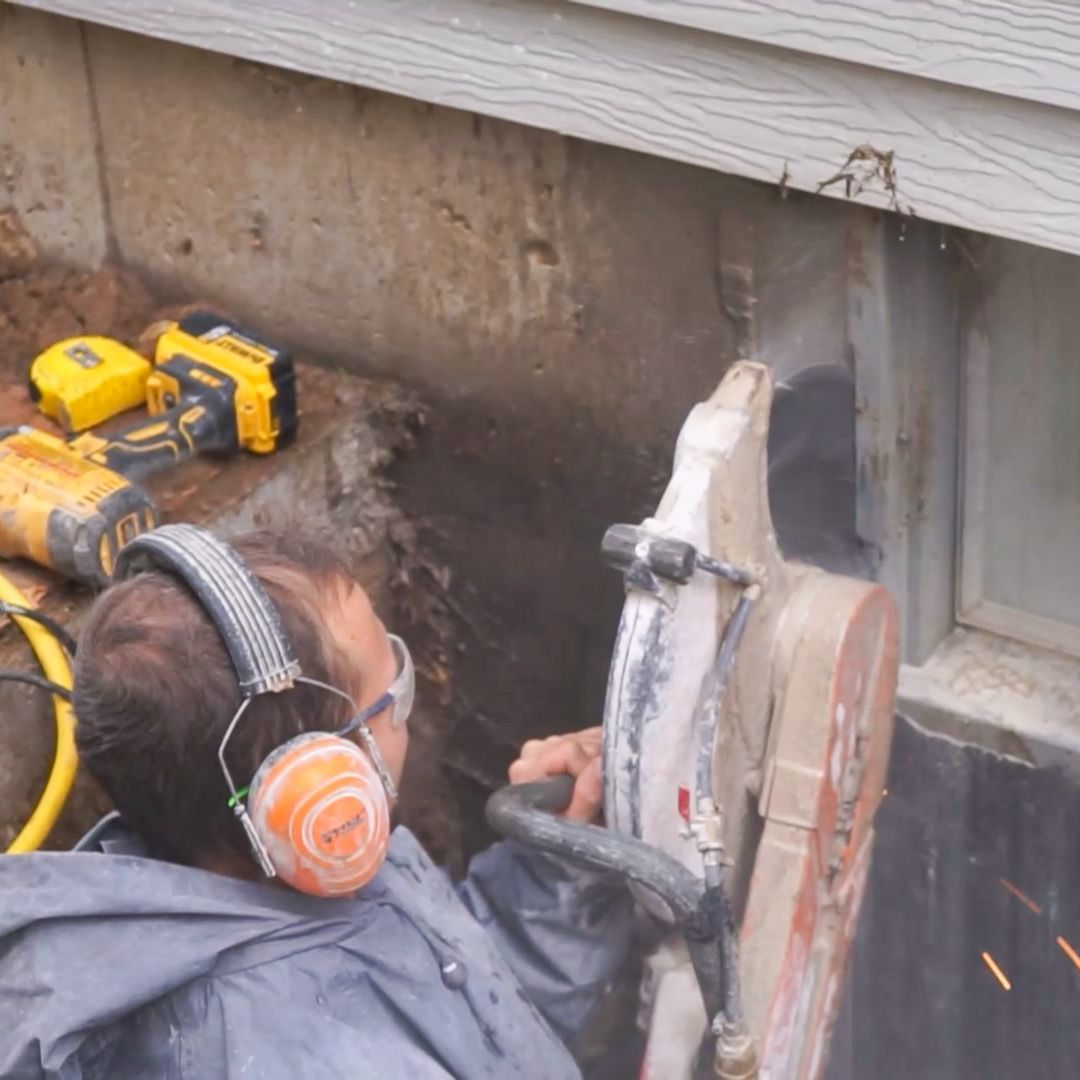
If you've ever seen our crew in action, you know it's not a gentle process. The saw is cooled with water as it cuts, so there's a spray of concrete mud and a cloud of dust. Our team wears protective gear such as safety glasses, hearing protection, and even rain gear to handle the wet slurry. It's easily one of the dirtiest, most physically demanding parts of the job.
But that effort is what makes the difference. By carefully controlling the depth, angle, and stopping point of each cut, our crew avoids running the blade past the corners. The result is an opening where the edges meet cleanly at each corner, with no overcuts extending into the surrounding wall.
How This Helps Keep Your Basement Dry
When the window opening has clean, precise edges with no overcuts, the egress window frame sits flush against the concrete on all sides. There are no hidden gaps behind the frame where water can sneak through.
From there, we frame the opening with kiln-dried, treated lumber, which gives us a solid, rot-resistant surface to mount the window. The egress window itself is carefully sealed with caulk, creating a continuous barrier between the inside of your basement and the outside elements.
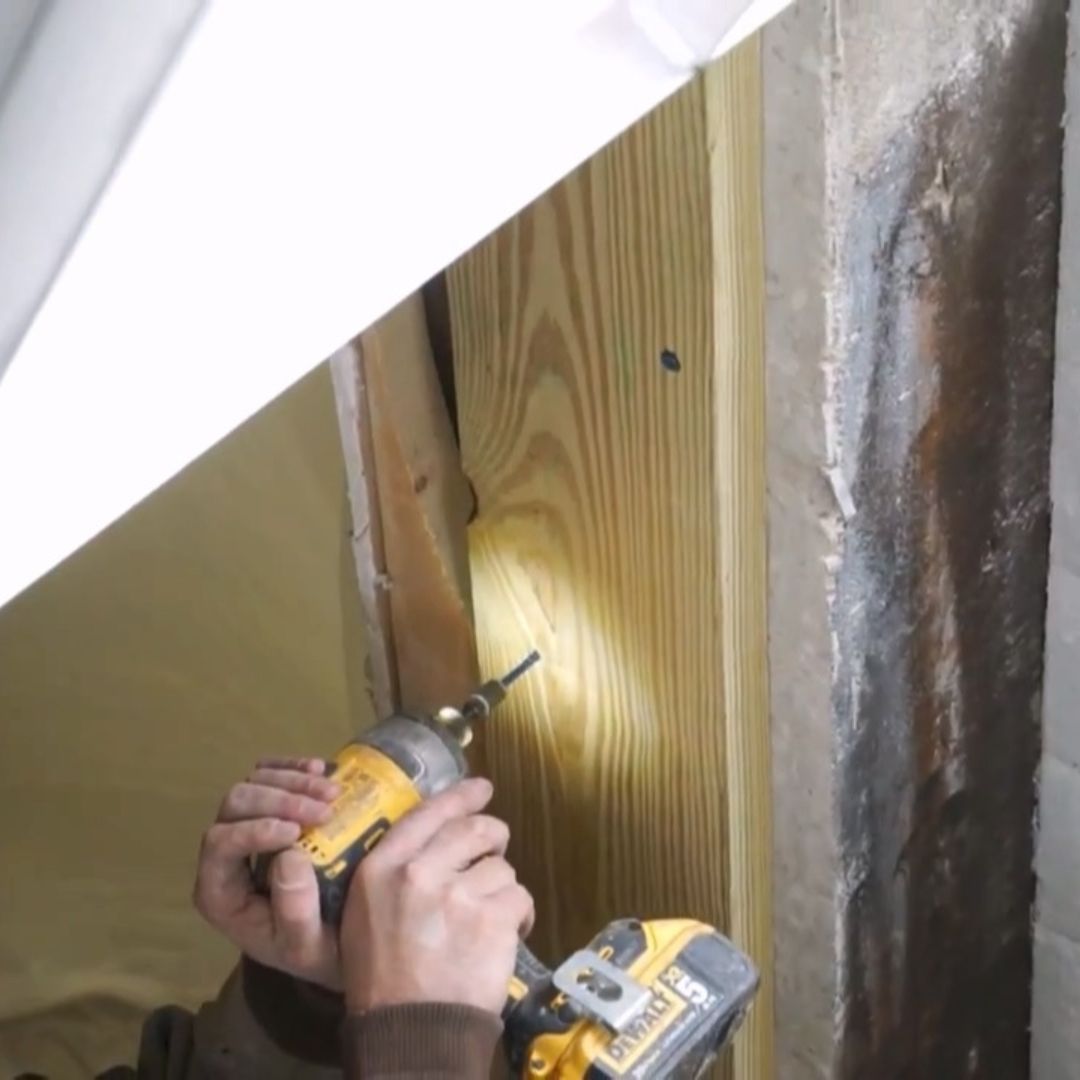
Because the opening matches the window frame precisely, every layer of our weatherproofing system — the lumber, the window, the caulk — can do its job the way it was designed to. No overcuts means no weak points in the seal. No weak points means no water intrusion.
That's why our egress window installations almost never have problems with water seeping into your basement. It starts with getting the cut right.
The Bottom Line
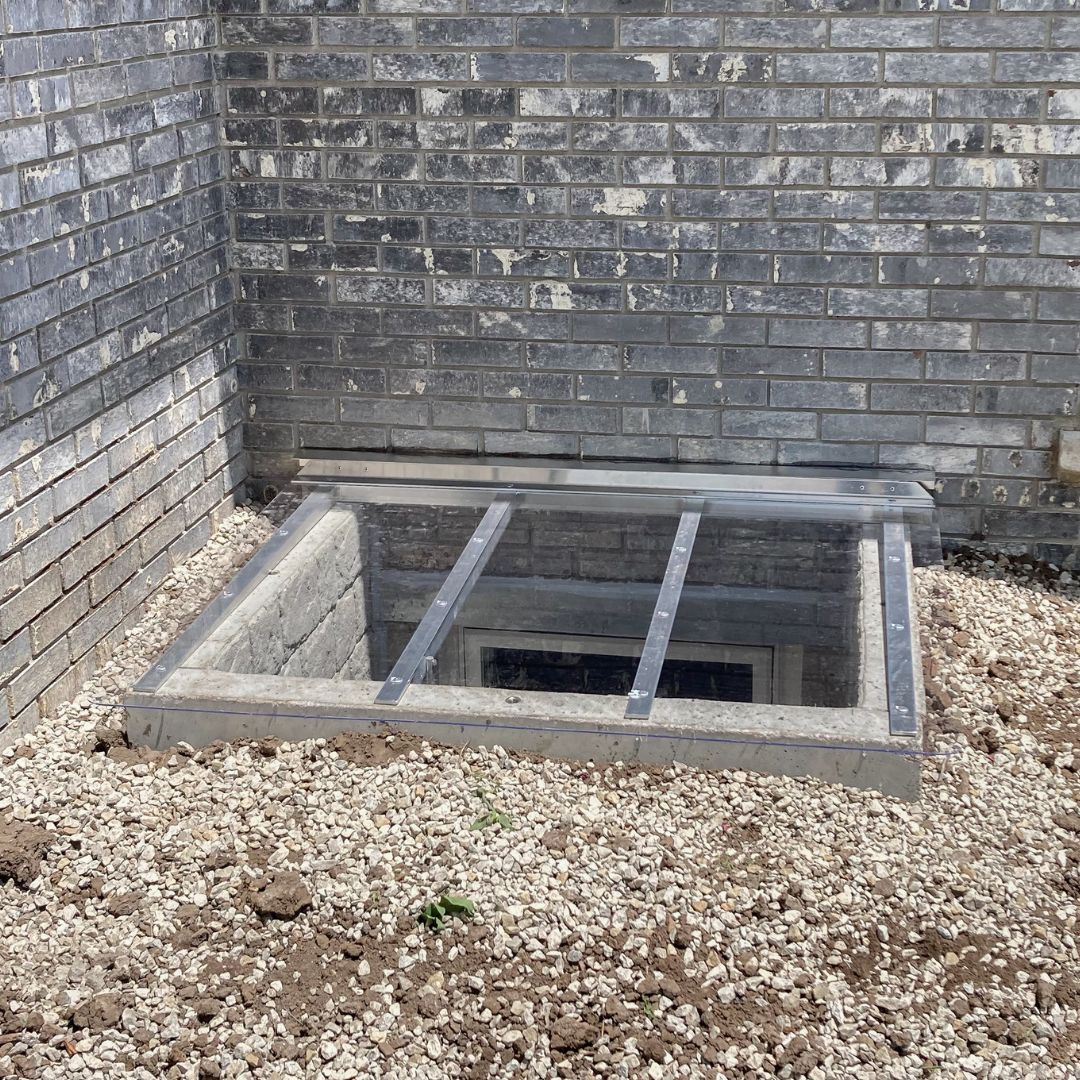
Not every contractor takes the time or has the equipment to avoid overcuts. It's faster and easier to just run the saw past the corner and move on. But at Illumicast, we believe the extra care during the cutting phase pays off for years to come.
A precise cut means a tighter fit. A tighter fit means a better seal. And a better seal means a dry basement — which is exactly what you should expect from a professionally installed egress window well.
Have questions about our installation process or want to see how a new egress window would look in your basement? Give us a call at 620-200-0616 or send us a message on our website.